
The Iceberg Concept is a visual and analytical tool that shows how major accidents are only the “tip of the iceberg,” while a much larger portion…unsafe behaviours, near-misses, minor injuries, and underlying system weaknesses…remain hidden below the surface.
Just like only 10% of an iceberg is visible above water, only a small percentage of workplace hazards are obvious. The majority exist in the form of:
- Unsafe acts
- Unsafe conditions
- Procedural gaps
- Behavioural habits
- Lack of awareness
- Poor communication
- Inadequate supervision
Contents
Why the Iceberg Concept Matters
Successful Safety Observation processes focus on uncovering unsafe behaviours before they result in injuries. The Iceberg Concept plays a main role by reminding supervisors and workers that:
1. Serious incidents rarely happen suddenly
They are usually the result of repeated unsafe actions or ignored unsafe conditions below the surface.
2. Minor issues predict major incidents
Small deviations, if not corrected, can lead to severe accidents later.
3. Proactive engagement prevents injuries
Safety Observations encourage early identification and discussion of unsafe acts and safe acts alike.
4. It reinforces a positive safety culture
By focusing on both safe and unsafe behaviors, teams build trust and openness.
Components of the Safety Iceberg
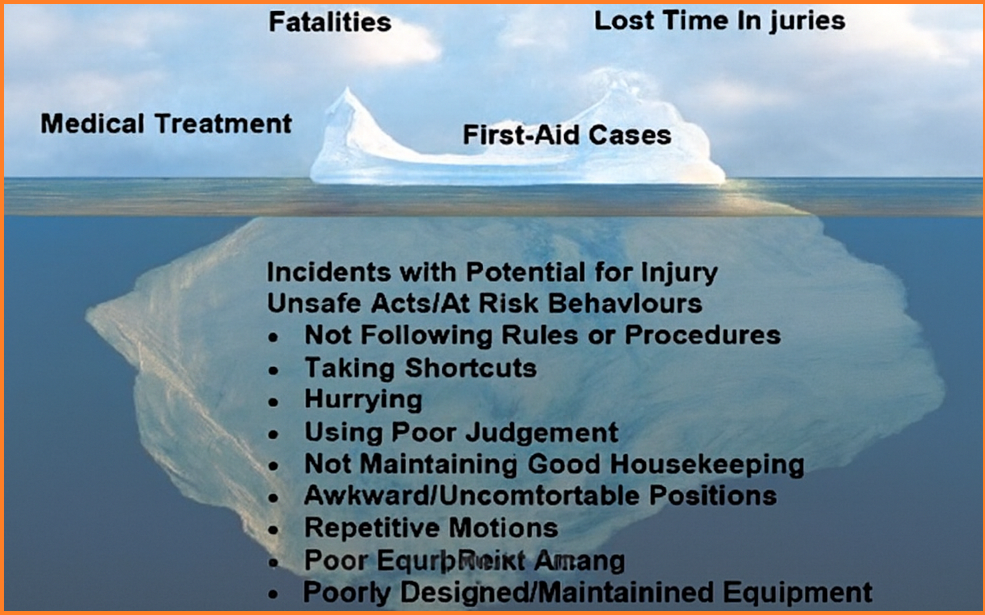
The typical Iceberg Concept used in HSE systems includes:
- Visible Layer (Top of the Iceberg)
- Fatalities
- Major injuries
- Recordable incidents
- Partially Hidden Layer
- Near misses
- Property damage
- Minor first-aid cases
- Deep Hidden Layer (Base of the Iceberg)
- Unsafe acts
- Unsafe conditions
- Habitual shortcuts
- Poor PPE compliance
- Lack of training
- Behavioural issues
- Absence of supervision
- Communication gaps
How Iceberg Concept Supports Safety Observations
- Reinforce safe behaviour
- Identify unsafe acts early
- Improve safety awareness
- Correct hazards before they escalate
- Encourage two-way communication
- Enhance leadership involvement in safety
By linking Safety Observations with the Iceberg Concept, organizations can treat minor issues as leading indicators and take corrective actions proactively.
The Iceberg Concept teaches us that the majority of safety risks are hidden beneath the surface. To uncover them, workplaces must adopt structured processes like the Safety Observation methodology.
When organizations consistently address unsafe behaviours, encourage open communication, and strengthen safety leadership, they reduce risks significantly and move closer to achieving a zero-incident workplace.