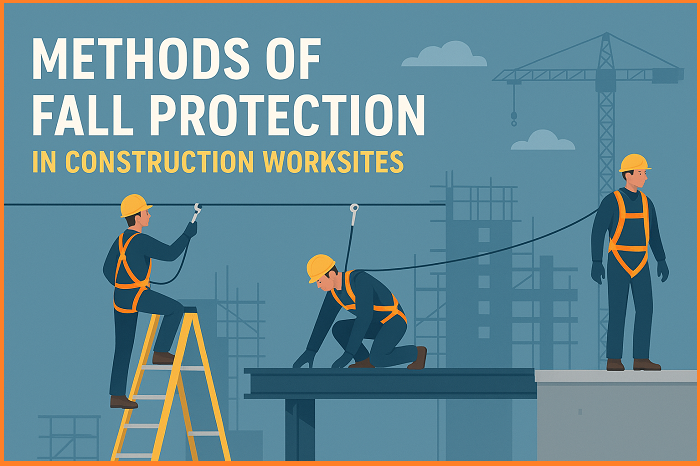
Falls from height remain one of the leading causes of workplace injuries and fatalities in construction and industrial operations. Effective fall protection systems are essential to prevent incidents and ensure a safe working environment. The following article describes various methods of fall protection, their applications, advantages, and key requirements.
Contents
1. Fall Restraint System
A fall restraint system is designed to prevent a worker from reaching a fall hazard. Unlike fall arrest, this system stops the worker from even entering a dangerous zone.
Key Components
- Full body harness
- Restraint lanyard or adjustable line
- Approved anchorage points
- Lifelines (horizontal/vertical if required)
How It Works
The system limits the worker’s movement so that they cannot reach the roof edge, excavation edge, open platform, or any unprotected level.
Advantages
- Prevents the fall entirely
- Minimal impact on worker mobility
- Easier to supervise compared to fall arrest systems
Typical Applications
- Roof maintenance
- Working on platforms with limited edges
- Elevated equipment maintenance
2. Guardrails
Guardrails are one of the most common and effective passive fall protection systems, requiring no action from the worker.
Types of Guardrails
- Temporary or fixed guardrails
- Steel, aluminum, or wooden guardrails
- Parapet guard systems
Standard Requirements
Typical guardrail systems include:
- Top rail: 900–1100 mm height (withstand at least 200 pounds/90.718 kg load)
- Mid-rail: halfway between top rail and platform (withstand at least 150 pounds/68 kg load)
- Toe board: minimum 100–150 mm height to prevent tools and materials from falling (withstand at least 50 pounds/22.7 kg load)
Benefits
- Protects multiple workers simultaneously
- Low maintenance and dependable
Applications
- Scaffold edges
- Roof perimeters
- Open platforms
- Stairways and access areas
3. Warning Line System
A warning line acts as a visual indicator to warn workers that they are approaching an unprotected edge.
Characteristics
- Consists of ropes, chains, flags, or lightweight barriers
- Positioned at least a minimum safe distance from an edge (varies by regulation, commonly 1.8 to 2 meters)
- Must be clearly visible with bright color flags at regular intervals
Function
The system does not physically stop a fall but alerts workers to maintain a safe distance from hazardous areas.
Ideal For
- Low-slope roofs
- Short-duration tasks
- Work areas where full guardrail installation is not feasible
Limitations
- Should always be used with a safety monitor or other fall-control measures
- Not suitable for high-risk edges without additional protection
4. Fall Arrest System
A fall arrest system protects a worker in the event a fall actually occurs by stopping the fall safely.
Components
- Full body harness
- Shock-absorbing lanyard or SRL (Self-Retracting Lifeline)
- Anchor point rated typically at 15 kN or as per regional regulations
- Lifelines, connectors, karabiners
Working Principle
If a worker falls, the system:
- Engages and absorbs shock
- Minimizes impact forces on the body
- Prevents the worker from hitting lower levels
Requirements
- Adequate fall clearance distance
- Regular inspection of harness and equipment
- Training for users
- Rescue plan must be in place
Application Areas
- High-rise construction
- Tower and scaffold erection
- Industrial maintenance at height
- Confined spaces with elevation hazards
5. Catch Platform (Safety Net / Catching Platform)
A catch platform, also known as a safety catch platform or safety net system, is used to catch workers or falling debris if a fall occurs.
Features
- Strong horizontal platform or net installed below the work area
- Made with high-strength mesh or solid materials
- Guard boards and toe boards may be included
Benefits
- Protects both workers and materials
- Provides collective protection for multiple personnel
- Reduces fall distances
Applications
- Building construction
- Bridge works
- Scaffold perimeter safety
- High-rise façade work
6. Safety Monitor System
A safety monitor is a trained, competent person who continuously observes and warns workers engaged in activities near a fall hazard.
Responsibilities of the Safety Monitor
- Warn workers when they move too close to edges
- Ensure workers follow fall protection procedures
- Has no other duties that may distract them
Conditions for Use
- Typically used where other fall protection systems are difficult to implement
- Requires good visibility and close proximity
- Common on low-slope roofs or short-duration work
Limitations
- Should not be used as a standalone system in high-risk areas
- Depends heavily on the monitor’s attentiveness
Fall protection is very important for ensuring worker safety at any construction or industrial site with height-related hazards. The selection of the proper method….whether fall restraint, guardrails, warning lines, fall arrest systems, catch platforms, or a safety monitor….depends on the nature of the work, site conditions, and regulatory requirements.
Implementing the right combination of these systems reduces the risk of falls and helps maintain a safe, compliant, and productive work environment.
Reference – OSHA