In construction and industrial projects, aerial lifts, elevating work platforms (EWPs), and material or personnel hoists are indispensable for accessing elevated work areas. While these tools enhance efficiency, they also introduce significant safety risks if not managed properly. Implementing robust safety practices is essential to protect workers and maintain operational integrity.
Contents
Why Safety Matters
Falls from heights and equipment failures are among the leading causes of workplace injuries. Proper training, inspections, and adherence to standards can drastically reduce these risks. The following guidelines outline best practices for safe operation.
Key Safety Principles
1. General Requirements
- Never modify equipment without manufacturer approval.
- Ensure all aerial lifts and hoists comply with ANSI A92 standards or equivalent.
- Assign competent and qualified personnel for inspections and operations.
2. Inspection Protocols
- Pre-Mobilization: Every unit must undergo an initial inspection before use.
- Daily Checks: Operators should inspect equipment at the start of each shift.
- Monthly Audits: Competent personnel must conduct and document monthly inspections. Defective equipment should be tagged as unsafe and removed from service immediately.
3. Training and Licensing
Operators must receive comprehensive training covering:
- Manufacturer’s operating instructions
- Project-specific safety requirements Training can be delivered through certified courses or recognized programs.
Safe Operation of Aerial Lifts and EWPs
- Operate only on level surfaces or within slope limits.
- Fully extend outriggers and use wheel chocks on inclines.
- Maintain clear zones and use barricades in restricted areas.
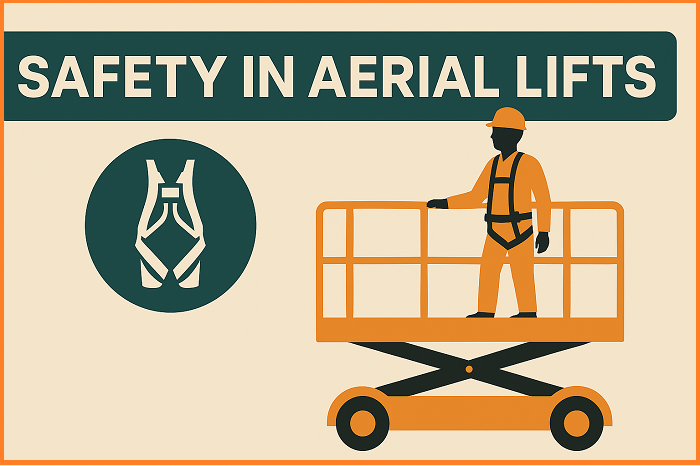
- Always wear a full-body harness and secure it to approved anchorage points.
- Never exceed load capacity or transport unnecessary materials.
- Movement with an occupied platform is prohibited unless designed for it.
Tip: Assign a Banksman/Flagman during operations for ground control and hazard monitoring.
Hoist Safety Essentials
- Post load capacities and operating instructions at the operator’s station.
- Replace wire ropes showing corrosion, broken wires, abrasion, or heat damage.
- Material Hoists: No riders allowed; entrances must have gates or bars.
- Personnel Hoists: Doors must have locking mechanisms and vision panels; external hoists require full-height enclosures.
Additional Precautions
- Never lift drums, toolboxes, or gas cylinders unless secured in an engineered lifting cradle.
- Follow ANSI standards for inspection, testing, and maintenance.
Safety in aerial lifts and hoists is not optional—it’s a responsibility. By enforcing inspections, training operators, and following operational guidelines, organizations can minimize risks and create a safer work environment.