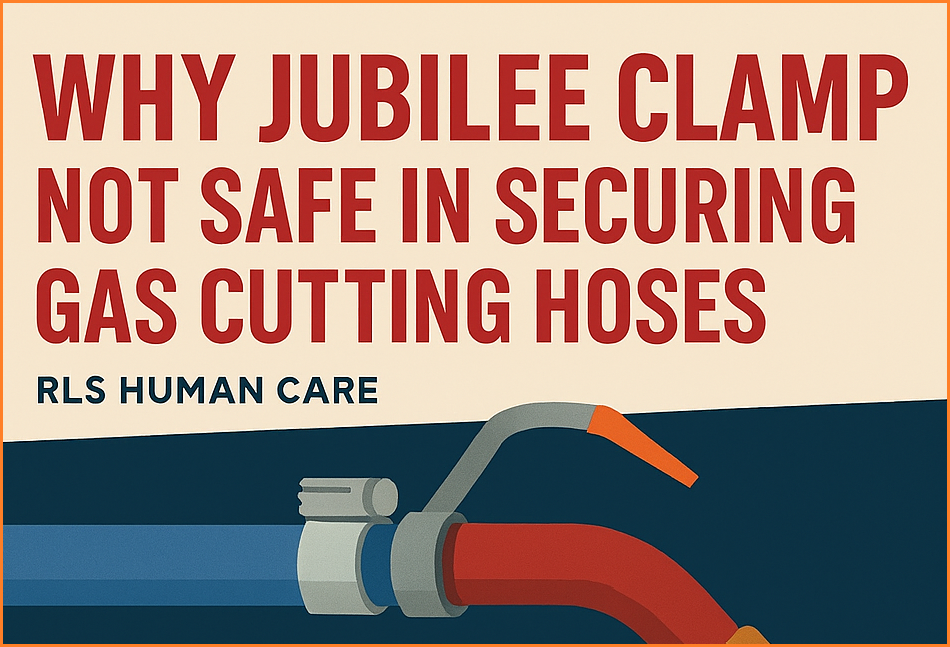
Gas cutting operations…whether in fabrication shops, construction sites, or industrial plants…require strict attention to safety. One of the most overlooked yet major hazards is the improper securing of oxy–fuel hoses. While many workers use jubilee clamps (commonly known as hose clamps) thinking they provide a tight fit, they are NOT designed or approved for gas cutting applications. Their use can lead to serious leaks, flashbacks, and fire incidents.
This article explains why jubilee clamps are unsafe and what the correct alternatives are.
Contents
1. Jubilee Clamps Are Designed for Liquid, Not Gas Pressure
Jubilee clamps are mainly manufactured to hold hoses carrying liquids such as water, oil, or coolant.
Gas systems…especially oxygen and fuel gas…require fittings that can maintain airtight sealing under variable pressure.
Key Risks:
- Even a tiny gap in the clamp can allow gas leakage.
- Leaks in oxygen-fuel systems can cause flashfires or explosions.
- Gas leaks are often invisible and odorless, especially oxygen.
Using a clamp meant for water lines on a gas hose creates a serious mismatch in safety requirements.
2. Jubilee Clamps Cause Hose Damage
Jubilee clamps tighten by creating point pressure, not uniform pressure.
When overtightened:
- They cut into rubber hoses
- Create weak spots and cracks
- Reduce hose lifespan
- Increase the chances of bursting and gas escape
A damaged hose in a gas cutting setup becomes a direct fire hazard.
3. Jubilee Clamps Cannot Withstand Vibration
Gas cutting operations involve:
- Equipment vibration
- Hose movement
- Temperature variations
Jubilee clamps tend to loosen over time, especially when hoses expand and contract.
A loosened clamp means one thing: leaks.
4. Not Approved by Safety Standards
International and national safety bodies, such as:
- ISO Standards for Oxy-Fuel Equipment
- OSHA (Occupational Safety & Health Administration)
- DGMS / PESO Guidelines (India)
- Manufacturer recommendations (e.g., ESAB, Messer, Koike)
—all clearly discourage or prohibit the use of jubilee clamps for gas hoses.
Most state and industry audits mark their use as a non-compliance or unsafe practice.
5. Incorrect Grip on Hose Tail Connectors
Gas cutting equipment uses ribbed or serrated hose tail connectors for proper grip.
The correct clamps apply even 360-degree pressure across the hose to secure it.
A jubilee clamp:
- Only tightens in one line
- Fails to grip the serrations properly
- May slide under pressure
This results in accidental detachment of hose from the torch or regulator.
6. Risk of Flashback and Fire
Loose or improperly sealed connections can lead to:
- Backfire
- Flashback
- Fire at the connection point
Flashback arrestors are the last line of defence—not a substitute for proper hose connections.
A jubilee clamp increases the likelihood of such events.
What Should You Use Instead? (Safe Alternatives)
To ensure safety, always use manufacturer‑approved clamps, such as:
Oxy‑fuel hose clips (double‑ear or spring‑type)
Designed specifically for gas cutting hoses.
Crimped ferrules
Used by professionals and OEMs for secure, permanent connections.
Standards‑certified hose clamps (IS/ISO approved)
Provide uniform pressure and leak-proof fitting.
These are engineered for the requirements of oxygen and acetylene/LPG systems.
Best Practices for Safe Gas Cutting Hose Connections
- Always inspect hoses for cuts, cracks, and aging.
- Use only approved, standard-compliant clamps.
- Ensure there is no leakage before operation (soap solution test).
- Keep hoses away from sharp edges, heat, and oil/grease.
- Replace damaged hoses immediately.
- Train workers in proper gas cutting safety procedures.
Using a jubilee clamp on a gas cutting hose may seem convenient, but it is dangerous, unapproved, and a major fire risk.
Gas systems demand specialized equipment designed for airtight security and safety compliance.
Protect your workplace, equipment, and people by using the right clamps, conducting regular inspections, and following standard safety practices.